River Crossing & Limited Surface Options
Fiber, delivered below the surface
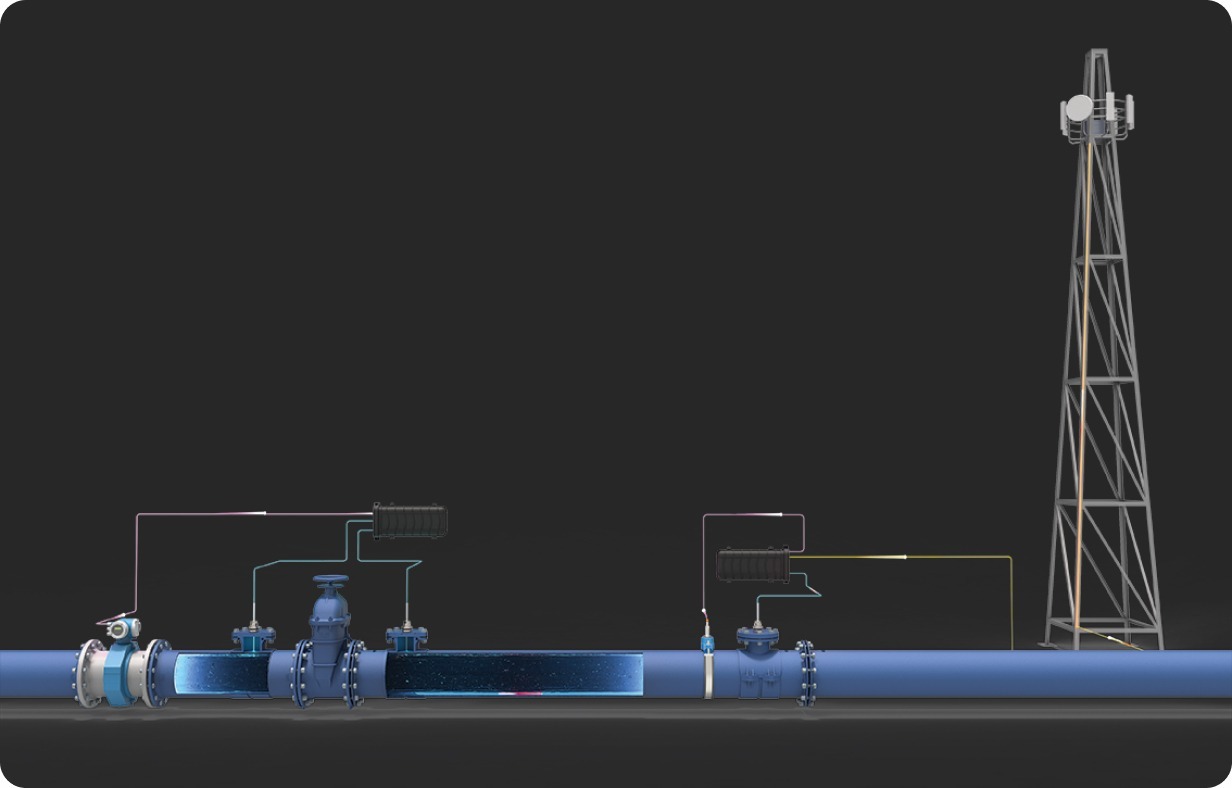
Deploy fiber optic cable faster and at a lower cost by using existing water pipes as a secure underground pathway, without trenching or aerial methods.
Fiber, delivered below the surface
Deploy fiber optic cable faster and at a lower cost by using existing water pipes as a secure underground pathway, without trenching or aerial methods.
30-40% lower TCO (total cost of ownership)
The Fiber Build Dilemma
Aerial: Exposed and capacity-limited
Vulnerable to weather and damage; pole access and make-ready add delays and cost.
Trenching: Shallow cuts drive TCO
Slow and disruptive. Shallow burial means frequent cuts, repairs, truck rolls, and outages add up.
Drilling: Costly, slow, uncertain
Fiber builds for the realities on the ground
ISPs
Regional & Rural ISPs
Municipal / Utility Broadband
Built for speed, cost control, and protection
Replace slow, disruptive builds with a below-surface pathway that reduces construction work, shortens timelines, and keeps fiber deep inside water pipes, protected many feet below ground.
Reduce cut risk and maintenance using a protected underground route; fewer permits, less restoration, fewer repair calls.
Avoid trenching and reduce field time; streamlined planning and fewer workzones speed deployment.
Minimal access points and reduced surface work mean less traffic control and fewer repairs.
Fiber is housed deep below the surface in water pipes, reducing exposure to weather and accidental cuts.
Extend or densify routes using the same protected corridor, adding capacity as demand increases.
Madison, KY
Anacortes, WA
Anacortes, WA
Richmond, KY
Anacortes, WA
One pathway. Many network applications.
Point-to-Point (P2P)
FTTH / Home Drop
MDU Connectivity
5G Backhaul
Backhaul + Last Mile
Greenfield / Underserved
Emergency Cross-Comms
Space Diverse Data Center Links
A protected fiber corridor, built in.
Aqualinq™ In-Pipe Fiber
Deploys Fiber in Pipes
How fiber moves through the grid
Step 1
Insert
Step 2
Deploy
Step 3
Protect
Step 4
Expand
From signal to decision to field action
Visual-Driven Insight
Automated Alerts
Field and Control Room Alignment
Fits How Utilities Operate
Field-proven in diverse environments
Challenge
What BlueGrid Enabled
“Most Innovative Water System of the Year” by Association of Washington Cities
Anacortes, WA
Challenge
Emergency Service Connectivity
What BlueGrid Enabled
Where Horizontal Drilling Failed, We Succeeded, And At A 50% Cost Savings
Richmond, KY
Challenge
Aerial, Trenching, & Drilling Were Impossible
What BlueGrid Enabled
Delivered Fiber Connectivity On A Route Traditional Builds Couldn’t Reach
Izaga, Spain
Ready to evaluate a route?
Share candidate routes
Access feasibility
Plan the build
Anacores, WA
Anacortes, WA
Madison, KY
About BlueGrid Communications
BlueGrid Communications, an LWF Group Company, helps providers deploy fiber faster and reduce total cost by using existing water pipes as a protected underground pathway. It avoids exposed aerial plant and trench/drill disruption and because pipes are typically deeper, reduces cut risk and long-term maintenance.
Headquartered in the U.S., with offices globally. Backed by U.S. and U.K. research and development (R&D), including our state-of-the-art R&D campus in the UK, plus leading academic partnerships and deployments trusted across six continents and 18 countries.
- 10+ years of successful in-pipe installations across 6 continents
- 52+ granted and in pending patents spanning sensing, software intelligence, and deployment.
- 100+ combined years of R&D behind the technology and platform.
FAQ
Aqualinq™ is BlueGrid’s fiber optic cable specially developed to be installed into water pipework enabling rapid and highly cost effective telecommunications and data networking rollout. With this approach, there’s no need for the labor-intensive processes of directional drilling or trenching.
By utilizing pipelines that are already in place, BlueGrid also sidesteps many of the bureaucratic hurdles typically involved in fibre optic deployment, such as obtaining permits from railway and highway authorities. This makes the deployment process not only faster but also significantly more cost-effective.
Special purpose Aqualinq techniques allow a fiber optic cable to be deployed while a water pipe is fully live, with no disruption to normal operating parameters

The Aqualinq™ cable is designed for a 20 year life expectancy and has undergone extensive and rigorous testing. The cable itself incorporates a water safe HDPE outer layer and a stainless steel armoured sheath to protect the fiber optic strands inside.
The outer sheath of the Aqualinq™ cable is made from the exact same material (HDPE) as plastic drinking water pipes and is completely safe. The cable is approved under the NSF/ANSI/CAN/61 standard which requires annual accreditation.
The cable has undergone rigorous testing for abrasion in both real life and laboratory installations along chemical leaching tests to ensure safety.
Robust dynamic disinfection procedures ensure a contamination-free fiber optic cable installation
The Aqualinq™ cable is installed in links. A single link goes from an upstream manhole chamber to a downstream manhole chamber and installation takes typically 3-4 hours per chamber. First a draw line pulled by a parachute is inserted upstream in the pipe using BlueGrid Live Insert™ tools and the parachute pulls a draw line to the downstream chamber where it is caught and withdrawn. The cable is then pulled back via the draw line between the chambers to complete the installation.
BlueGrid has developed installation methods that can be used by any competent contractor to install up to 1 mile of Aqualinq™ cable per day per team. A typical installation team consists of 4 to 5 people with a minimum of 2 per chamber.
To date the system has been installed in most materials including, cast iron, stainless steel, ductile iron, plastic and concrete.